
In the photodetector development framework, the photoelectric effect directly governs signal conversion, and detection sensitivity scales with quantum efficiency and noise suppression. “Performance characterization” is not merely a final testing step — it is a critical diagnostic tool that dictates device design and signal-to-noise ratio (SNR) optimization. Using incomplete characterization methods across systems can shift performance evaluations significantly, enough to invalidate weak signal measurements or obscure real improvements from structural and material optimizations. This guide addresses foundational principles and advanced performance characterizations specifically, as a practical reference for design verification and quality control.
Chapter 1: Introduction
1.1 What is the Background and Significance of the Photodetector?
A photodetector (also known as an optoelectronic detector) is an indispensable key component in modern technology and industry. Its development is closely intertwined with advances in semiconductor technology, having undergone significant transformation over the past several decades. The core principle of a photodetector is based on the photoelectric effect, a phenomenon first explained in 1905, which earned the discoverer the 1921 Nobel Prize in Physics.
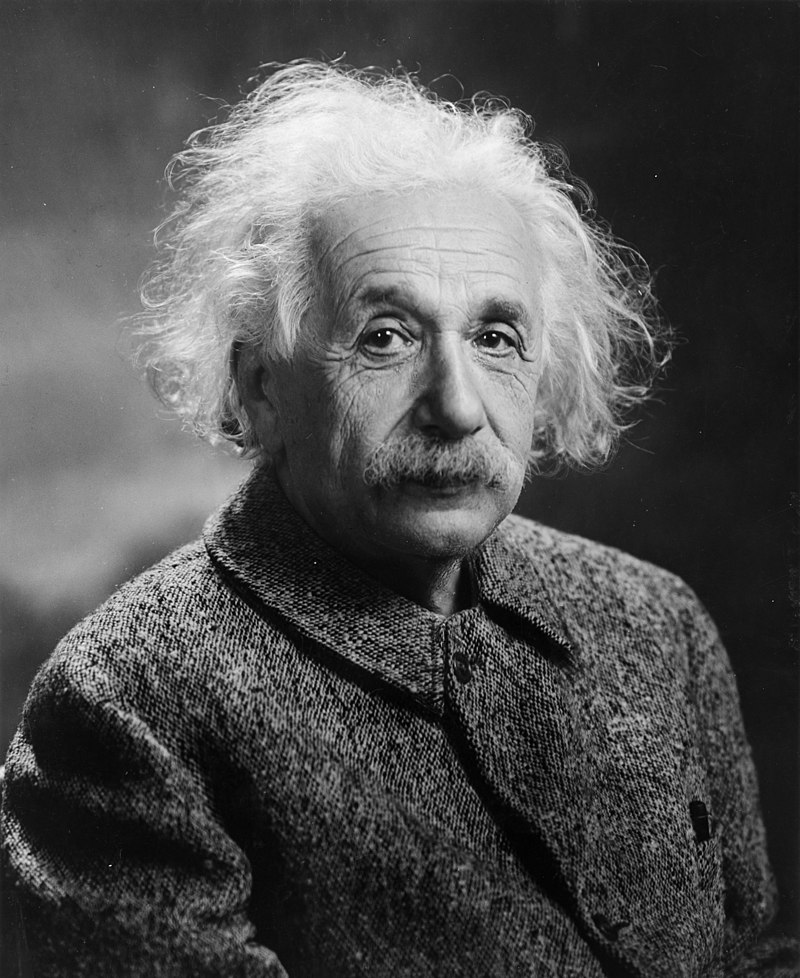
Figure 1. History and discovery of the photoelectric effect in photodetector applications.
With rapid advances in semiconductor technology, particularly during the second half of the 20th century, the performance of the photodetector has improved substantially. From early photomultiplier tubes to modern high-sensitivity semiconductor detectors, detection sensitivity has increased by several orders of magnitude. For instance, in the visible spectrum, modern silicon-based photodiodes can achieve quantum efficiency exceeding 90%.
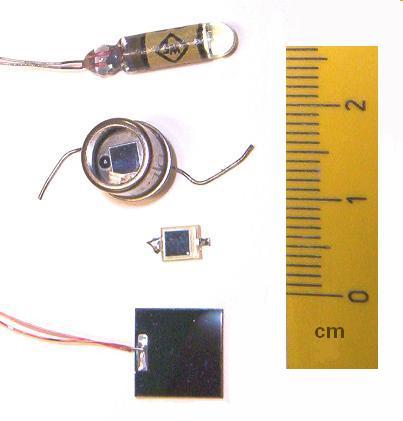
Figure 2. Substantial improvement in detection sensitivity of modern semiconductor photodetectors.
The significance of the photodetector is evident in its widespread application in modern technology. These devices are critical components for converting optical signals to electrical signals and play an irreplaceable role in information acquisition, transmission, and processing. With the development of emerging technologies such as the Internet of Things (IoT), 5G communications, and autonomous vehicles, the demand for a high-performance photodetector continues to grow.
1.2 What Are the Key Application Fields of Photodetectors?
Photodetectors play important roles across numerous fields with diverse applications:
- Communications: In fiber optic communication systems, a photodetector is used at the receiver end to convert optical signals to electrical signals. High-speed photodetectors are essential components for enabling high-bandwidth communications.
- Biomedical Imaging: In devices such as fluorescence microscopy and optical coherence tomography (OCT), a high-sensitivity photodetector can capture weak biological optical signals. For example, in single-molecule detection, avalanche photodiodes (APDs) can detect individual photons.
- Environmental Monitoring: Photodetectors play important roles in atmospheric pollution monitoring and gas detection. For instance, differential optical absorption spectroscopy (DOAS) techniques employ ultraviolet-visible photodetectors to detect trace gases in the atmosphere.
- Security and Surveillance: Infrared photodetectors are widely used in night vision systems and thermal imaging equipment.
- Scientific Research: In fields such as astronomical observation and particle physics experiments, an ultra-high-sensitivity photodetector is indispensable.
1.3 Why is Performance Characterization Critical in Photodetector Development?
Performance characterization plays a critical role in the development of any photodetector. It is both a means of evaluating device performance and an important tool for guiding design optimization and quality control. Through precise performance characterization, researchers can develop a deeper understanding of device operation, identify potential performance bottlenecks, and establish effective improvement strategies.
The following section details five key areas where performance characterization dictates device optimization:
1. Design Verification and Optimization
Performance characterization enables researchers to verify design concepts and conduct optimization. For example, by measuring the quantum efficiency (QE) of a photodetector, the device’s responsiveness to incident photons can be evaluated. Quantum efficiency is defined as:
where η is quantum efficiency, h is Planck’s constant, ν is light frequency, q is electron charge, I_ph is photocurrent, and P_in is incident light power. By analyzing how quantum efficiency varies with wavelength, researchers can optimize device parameters such as absorption layer thickness and surface passivation processes to enhance response efficiency within specific wavelength ranges.
2. Noise Analysis and Signal-to-Noise Ratio Optimization
Noise is a key factor limiting the sensitivity of a photodetector. Through detailed noise characterization, the primary noise sources can be identified and appropriate suppression measures implemented. The total noise current of a photodetector can be expressed as:
where i_sh² is shot noise, i_th² is thermal noise, and i_1/f² is 1/f noise. By measuring noise power spectral density, researchers can distinguish the contributions from different noise types and implement targeted measures. For example, optimizing device structure to reduce dark current can effectively lower shot noise; improving material quality can reduce 1/f noise.
The signal-to-noise ratio (SNR) of the photodetector directly impacts its detection capability:
where I_s is signal current and i_n² is the mean square of total noise current. By increasing signal current and reducing noise current, the photodetector’s SNR can be significantly improved, thereby enhancing its ability to detect weak light signals.
3. Responsivity and Bandwidth Optimization
Responsivity (R) is an important parameter for evaluating the ability of a photodetector to convert optical signals to electrical signals:
High responsivity means the detector can generate stronger electrical signal output, facilitating subsequent signal processing. However, increased responsivity typically comes with reduced detector bandwidth. Bandwidth is related to response time τ as:
where f_3dB is the 3dB bandwidth. In practical applications, a balance must be found between responsivity and bandwidth. For example, in high-speed optical communication systems, some responsivity may be sacrificed to achieve higher bandwidth; conversely, in weak signal detection applications, responsivity enhancement may be prioritized.
4. Linearity and Dynamic Range Analysis
Linearity analysis ensures that the photodetector maintains linear response across a wide range of incident light intensities. By measuring the linear dynamic range (LDR) of the detector, its performance at different light intensities can be evaluated:
where I_max is the maximum photocurrent in the linear response range and I_min is the minimum detectable photocurrent (typically determined by noise floor). Optimizing LDR extends the application range, enabling it to handle both strong and weak signals simultaneously.
5. Temperature Dependence Analysis
Many photodetector performance parameters exhibit temperature dependence. For example, the breakdown voltage (V_br) of an avalanche photodiode (APD) varies with temperature according to:
where α is the temperature coefficient and T_0 is the reference temperature. Through detailed temperature dependence analysis, temperature compensation strategies can be developed, such as automatic gain control circuits, to maintain stable detector performance across a wide temperature range.
Conclusion
Performance characterization provides scientific guidance for photodetector development. Through systematic measurement and analysis, researchers can:
- Verify the accuracy of theoretical models
- Identify performance bottlenecks and establish optimization strategies
- Evaluate the merits of different design approaches
- Establish reliable quality control standards
In the highly competitive optoelectronics market, precise performance characterization is not only key to improving product performance but also fundamental to gaining customer trust. As application requirements continue to evolve, performance characterization techniques continue to advance, such as through incorporation of artificial intelligence-assisted analysis, which will further accelerate the development of photodetector technology.
What Are the Existing Research Gaps?
Current research still exhibits the following gaps:
- Lack of unified characterization standards: Different research groups often employ inconsistent testing methods and conditions, making direct comparison of results difficult.
- Limited characterization techniques for high-speed detectors: As communication speeds continue to increase, existing characterization methods struggle to meet the testing requirements of an ultra-high-speed (>100 GHz) photodetector.
- Insufficient multi-parameter co-optimization strategies: Most research focuses on single-parameter optimization, lacking methods for co-optimizing multiple critical parameters such as responsivity, bandwidth, and noise.
- Underexplored applications of artificial intelligence in characterization: Although AI techniques have been applied in materials design, research on detector characterization and performance prediction remains limited.
- Need for characterization methods for novel detector architectures: Novel structures such as flexible detectors and three-dimensional integrated devices pose new challenges for characterization techniques.


