
Research Background and Challenges
Research Challenges and Bottlenecks
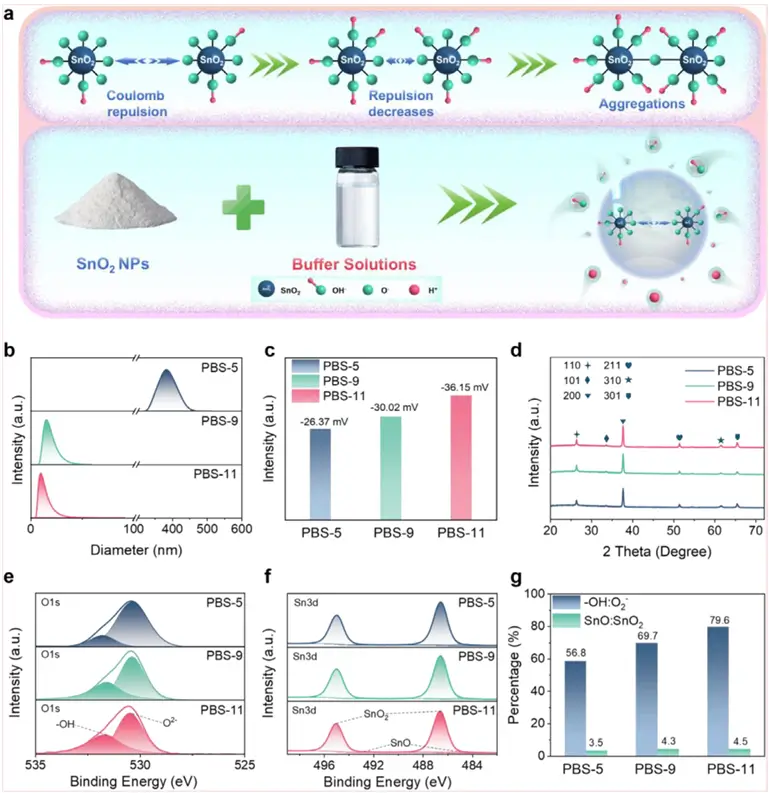
Tin dioxide (SnO2) has become a widely applied electron transport layer (ETL) material in solution-processed perovskite solar cells due to its excellent electron mobility, high optical transparency, and favorable energy level alignment with the perovskite layer. However, solution-processed SnO2 nanoparticle (NP) colloids in aqueous solutions suffer from thermodynamic instability, undergoing agglomeration and precipitation due to van der Waals attractive forces. Traditional commercial SnO2 solutions rely on strongly alkaline stabilizers (approximately pH 11-12) to enhance electrostatic repulsion for promoting colloidal dispersion. However, excessive hydroxyl groups accelerate the deprotonation of formamidinium ions (FA+) in perovskites, thereby degrading the stability of both perovskite films and devices.
Research Team and Methodology
The research team led by Professors Yonghua Chen, Yingdong Xia, and Lingfeng Chao from the School of Flexible Electronics (Future Technologies) and the Institute of Advanced Materials at Nanjing Tech University proposed a phosphate buffer synthesis strategy to stabilize SnO2 colloids. This method utilizes phosphate buffer solutions to maintain a stable pH environment during synthesis, dynamically regulating electrostatic repulsion between nanoparticles, thereby suppressing agglomeration and ensuring uniform dispersion. This strategy enables precise control over the hydroxyl content and oxygen vacancy concentration on the SnO2 film surface, ultimately promoting efficient electron transport and reducing interfacial recombination. (Figure 1)
Core Findings and Achievement Overview
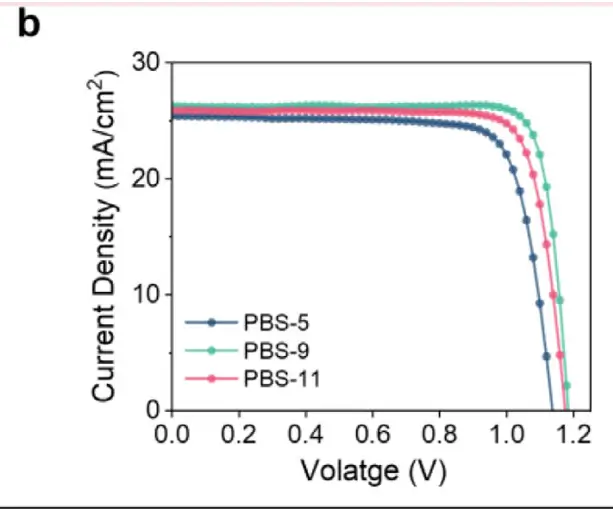
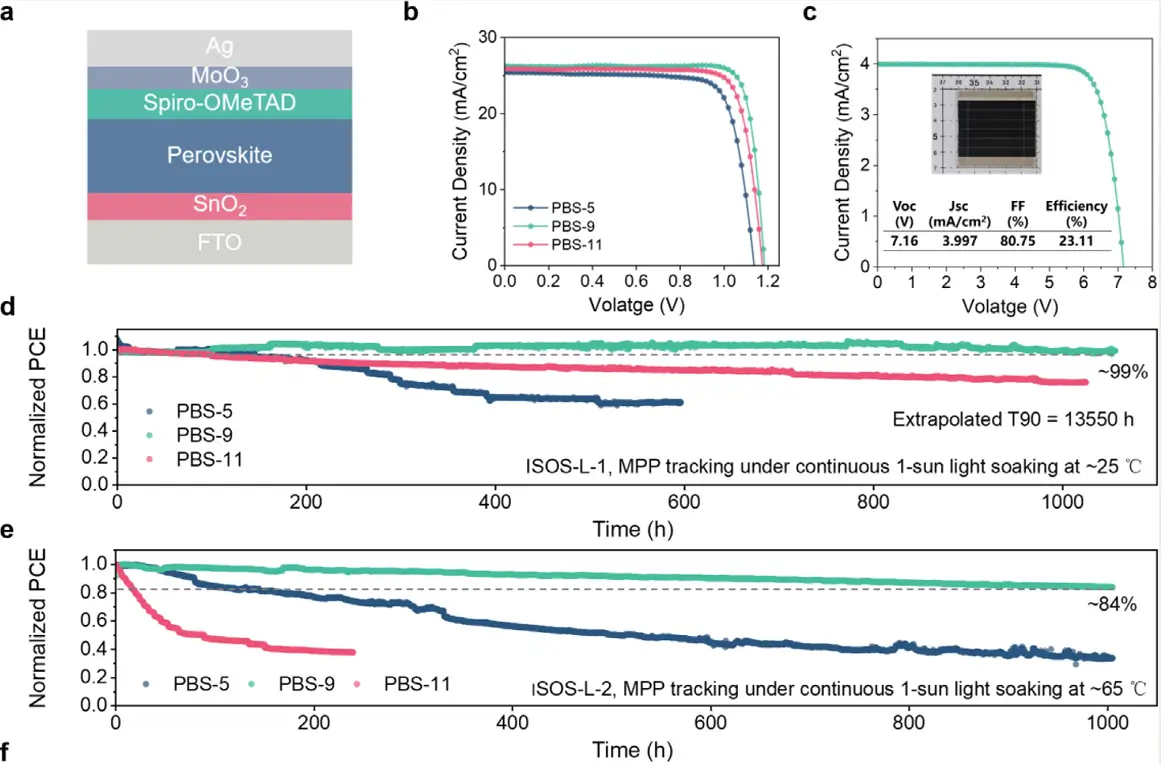
The study compared SnO2 samples prepared in phosphate buffer solutions at weakly acidic (pH 5, denoted as PBS-5), weakly alkaline (pH 9, denoted as PBS-9), and strongly alkaline (pH 11, denoted as PBS-11) conditions. Among these, devices based on PBS-9 demonstrated superior performance, achieving a power conversion efficiency (PCE) of 26.40%. (Figure 4b)
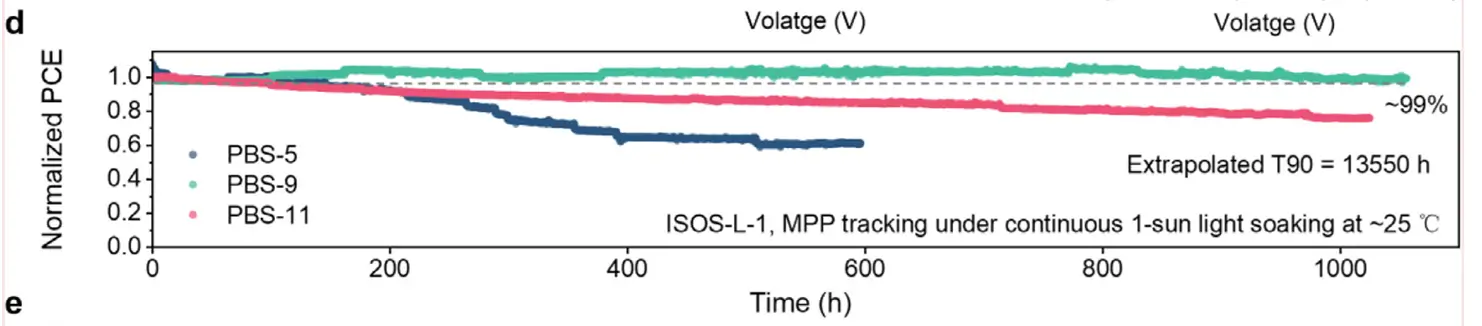
Devices employing this strategy also exhibited excellent long-term operational stability: encapsulated devices maintained 99% of their initial PCE after 1053 hours of continuous operation under ISOS-L-1 standards. (Figure 4d)
Quasi-Fermi Level Splitting (QFLS) Characterization and Non-Radiative Recombination Analysis
QFLS Measurement Method and Data
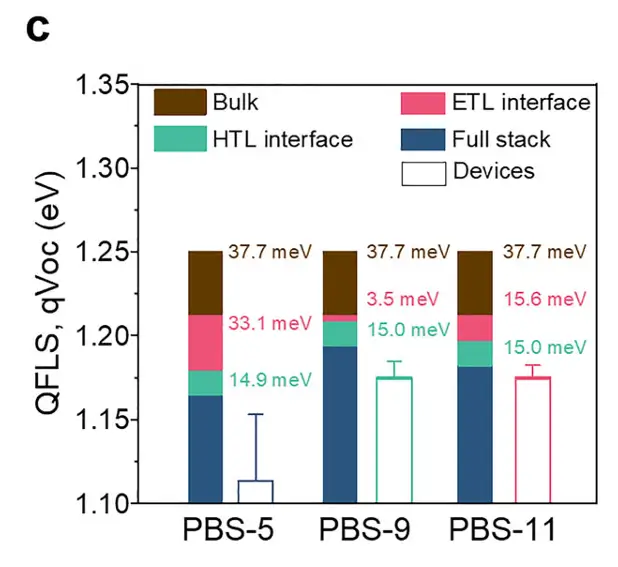
QFLS values were extracted from perovskite film spectra through photoluminescence quantum efficiency (PLQY) measurements. The reduction in QFLS directly reflects increased non-radiative recombination losses.
Data showed that compared to pristine perovskite films, devices based on PBS-5, PBS-9, and PBS-11 exhibited QFLS reductions of 33.1 meV, 3.5 meV, and 15.6 meV, respectively. (Figure 2c) These results indicate that PBS-9 devices showed the smallest QFLS reduction, meaning their non-radiative recombination losses were effectively suppressed. The optimization of QFLS is closely related to the moderate hydroxyl and oxygen vacancy concentrations on the PBS-9 film surface.

Carrier Dynamics and Defect Analysis
QFLS analysis results were highly consistent with other electrical and optoelectronic characterization measurements:
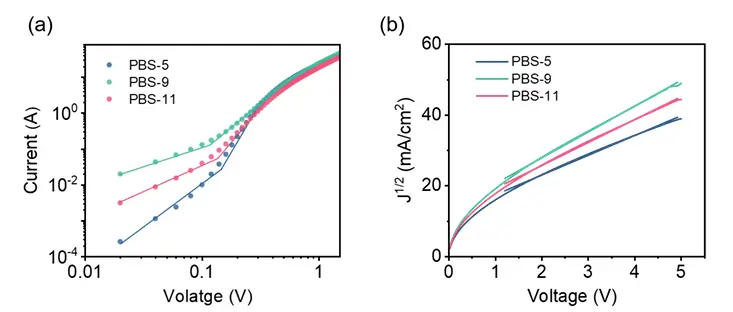
- Defect Density and Carrier Mobility: Space-charge-limited current (SCLC) analysis revealed that PBS-9 films possessed lower trap-filled limit voltage (VTFL = 0.115 V) and trap state density (Nt = 12.026 × 1014 cm-3), along with higher electron mobility (μe = 5.22 × 10⁻⁴ cm2V-1s-1). This indicates that PBS-9’s surface chemical modification effectively reduced carrier scattering and trapping caused by defects. (Figure S12)
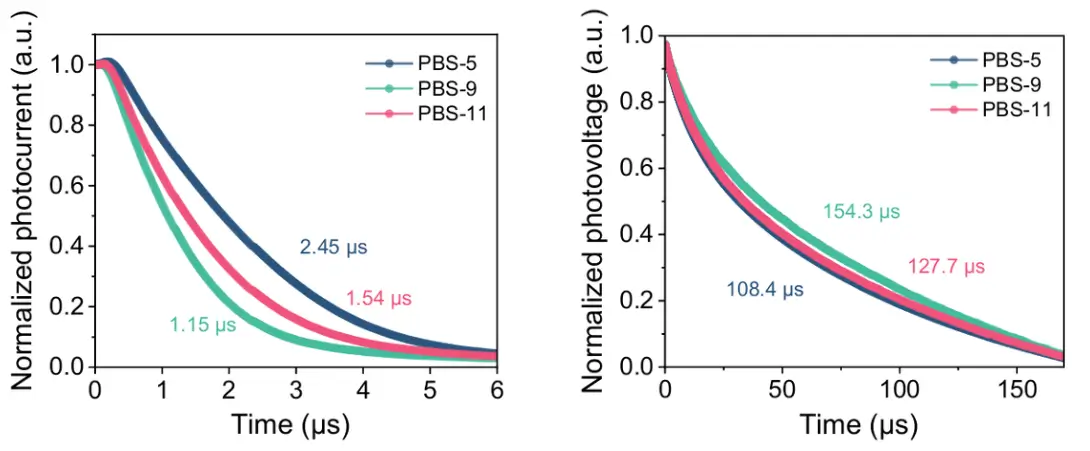
- Carrier Recombination and Transport: Transient photovoltage (TPV) measurements showed that PBS-9 devices exhibited longer carrier recombination lifetimes (154.3 μs), superior to PBS-5 (108.4 μs) and PBS-11 (127.7 μs). Meanwhile, their transient photocurrent (TPC) decay time was shorter (1.15 μs), confirming that PBS-9 promoted faster charge extraction. (Figures S17, S18)
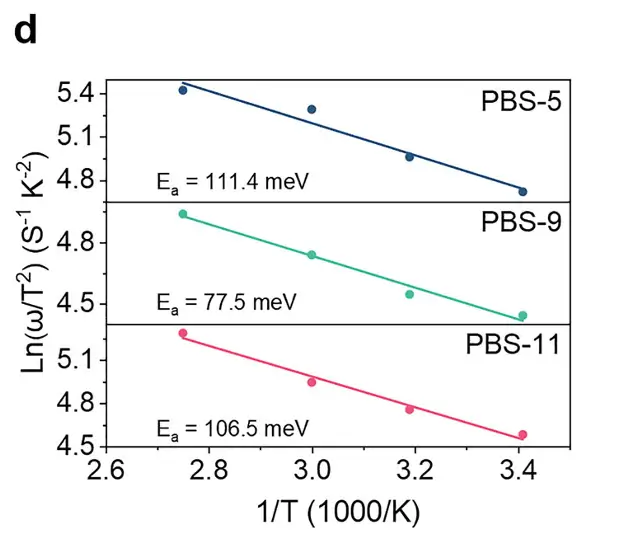
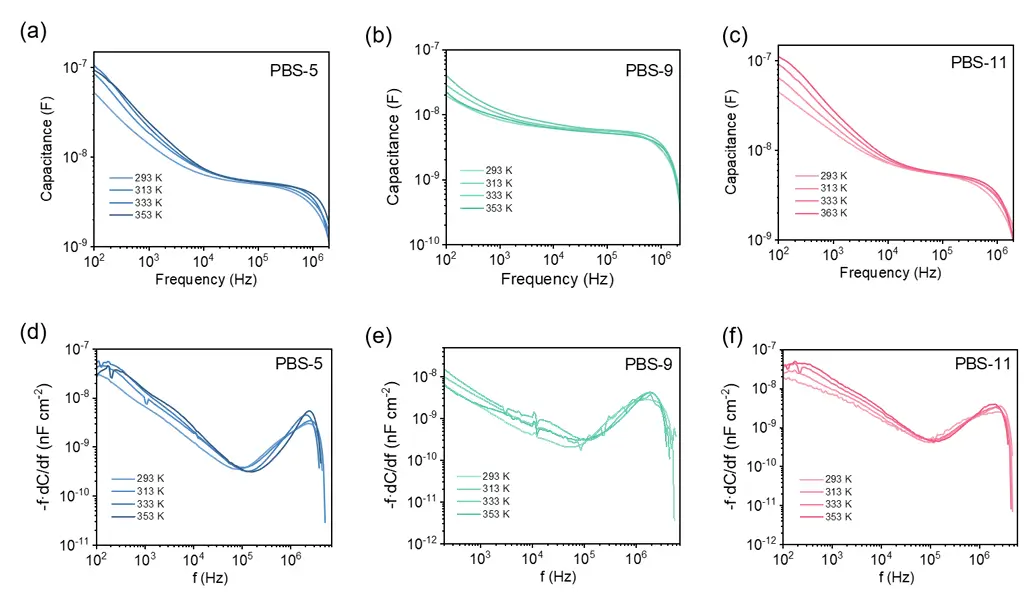
- Defect Activation Energy: Temperature-dependent capacitance analysis further confirmed that PBS-9 devices had a defect activation energy (Ea) of only 77.5 meV, lower than PBS-5 (111.4 meV) and PBS-11 (106.5 meV). (Figures 2d, S21)
Spatial Uniformity Characterization via PL Mapping
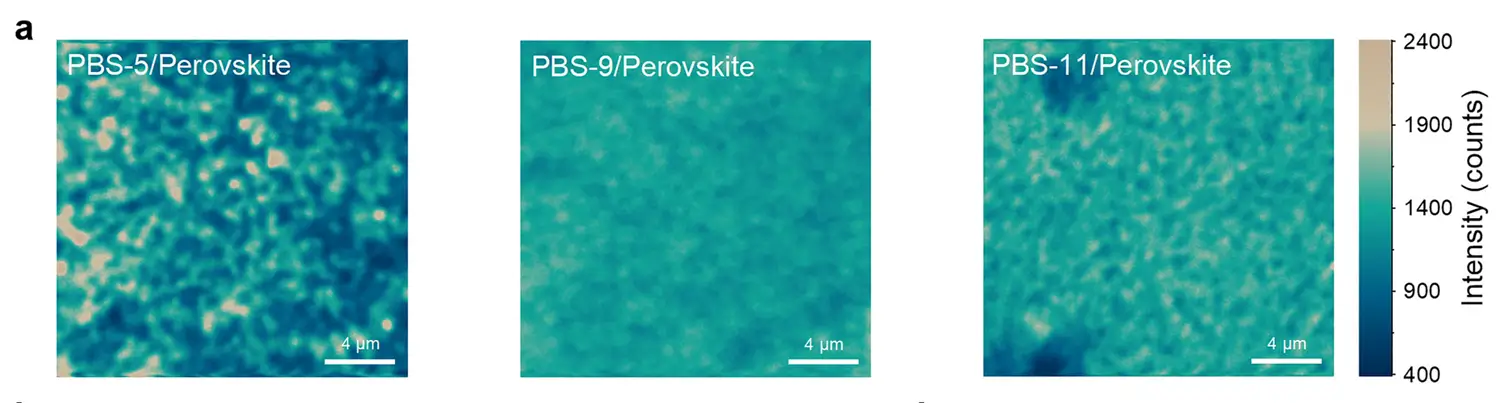
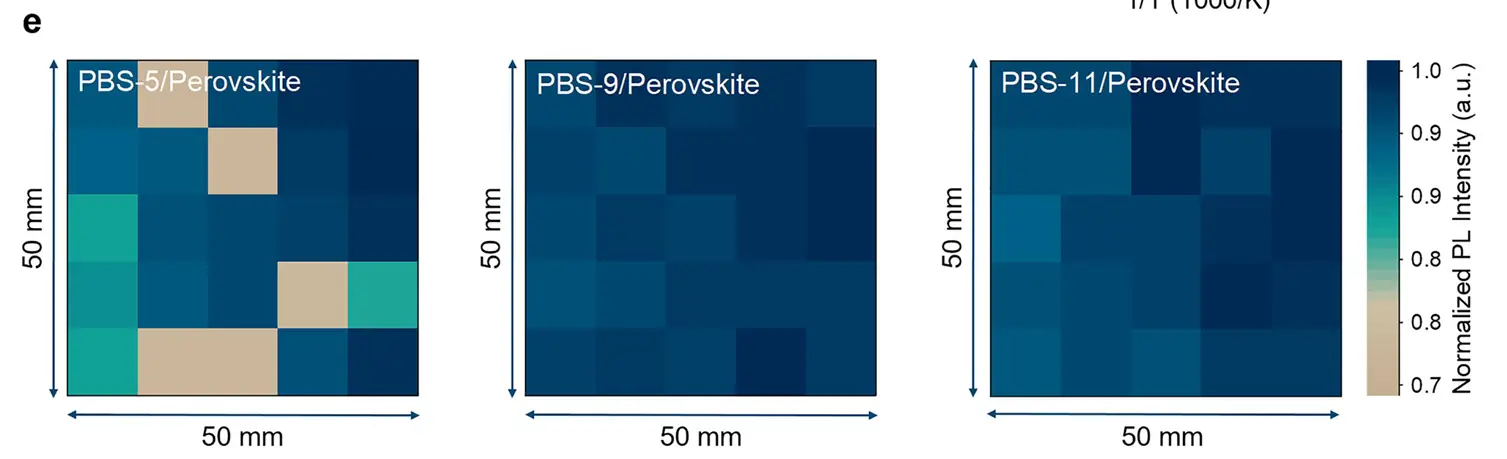
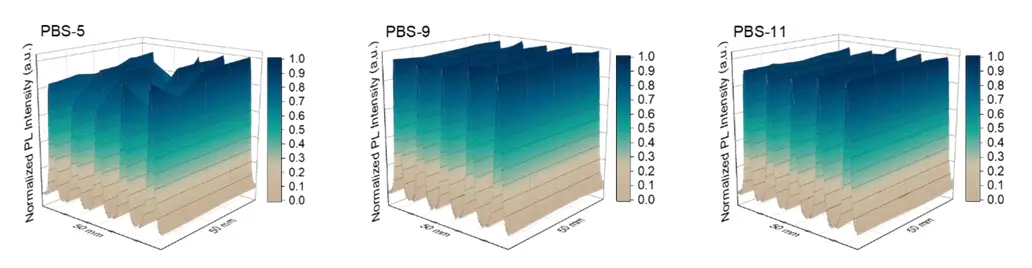
Photoluminescence imaging (PL Mapping) was used to evaluate the spatial uniformity and interfacial contact quality of large-area films. Perovskite films on PBS-9 substrates (5 cm × 5 cm) exhibited highly uniform PL intensity across 25 regions. (Figures 2e, S23) Lower and uniform PL intensity reflects efficient carrier extraction capability at the SnO2/perovskite interface, with spatially homogeneous carrier transport. This result corroborates the conclusions regarding non-radiative recombination losses revealed by QFLS measurements.
Current-Voltage (J-V) Curve Measurements
The research team utilized Enlitech’s SS-F5-3A solar simulator to perform J-V curve measurements under AM 1.5G standard illumination conditions (100 mW cm-2), calibrated using NREL standard silicon cells.
Measurement results directly compared device performance using different SnO2 electron transport layers. Among them, the champion device based on PBS-9 achieved a power conversion efficiency (PCE) of 26.40%. Its detailed photovoltaic parameters were: open-circuit voltage (Voc) 1.18 V, short-circuit current density (Jsc) 26.29 mA/cm2, and fill factor (FF) 84.75%. In comparison, PBS-5 devices achieved a PCE of 22.62%, while PBS-11 devices reached 24.91%.
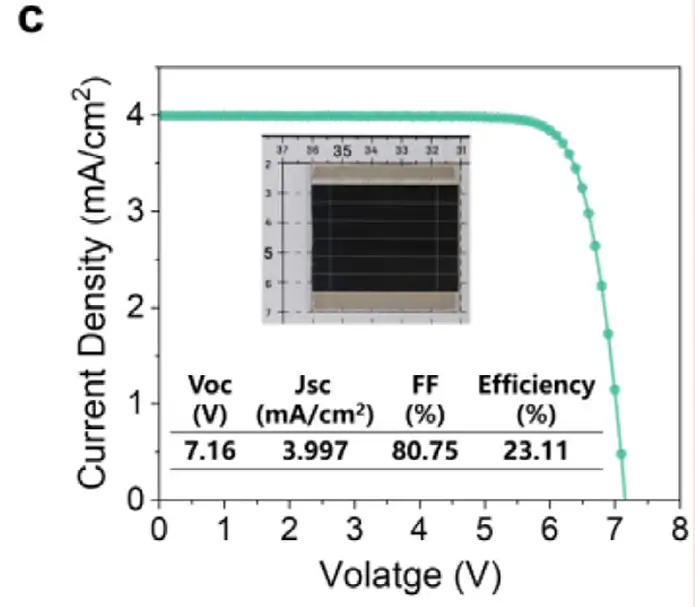
Additionally, this strategy demonstrated feasibility for large-area fabrication. A 5 cm × 5 cm module (active area 12.6 cm2) achieved a PCE of 23.11% through J-V testing. (Figure 4c)
Conclusion and Research Achievements
The phosphate buffer synthesis strategy successfully achieved stabilization of SnO2 colloids and optimized ETL performance through precise control of surface hydroxyl groups and oxygen vacancies on SnO2. Based on this strategy, PBS-9 devices achieved a PCE of 26.40%, while 12.6 cm2 modules reached a PCE of 23.11%.
QFLS characterization represents one of the core contributions of this study, providing a robust electrical mechanism explanation for device performance enhancement. Through quantitative QFLS data analysis, it was confirmed that PBS-9 devices effectively suppressed non-radiative recombination losses, thereby better preserving Voc potential. This explains their superior photovoltaic performance and long-term operational stability.
PBS-9 devices in this study maintained 99% of their initial PCE after 1053 hours of continuous operation under ISOS-L-1 standards, demonstrating excellent stability. This research demonstrates the application potential of the phosphate buffer strategy in developing large-area, high-performance, and highly durable perovskite photovoltaic modules. (Figures 4c, 4d)
Original Publication Information
Article Title: Stabilizing SnO2 Colloids via Phosphate Buffering for Efficient and Durable Perovskite Photovoltaics
Journal: Advanced Materials
Publication Date: December 7, 2025
DOI: https://doi.org/10.1002/adma.202518260


